
Ad creative that actually works
for B2B SaaS.
Demo videos, customer testimonial cuts, and paid-social ads ready for LinkedIn, TikTok, Reels, and Meta. Ship fresh creative weekly without booking a film crew.

Trusted by 100+ post-PMF SaaS teams
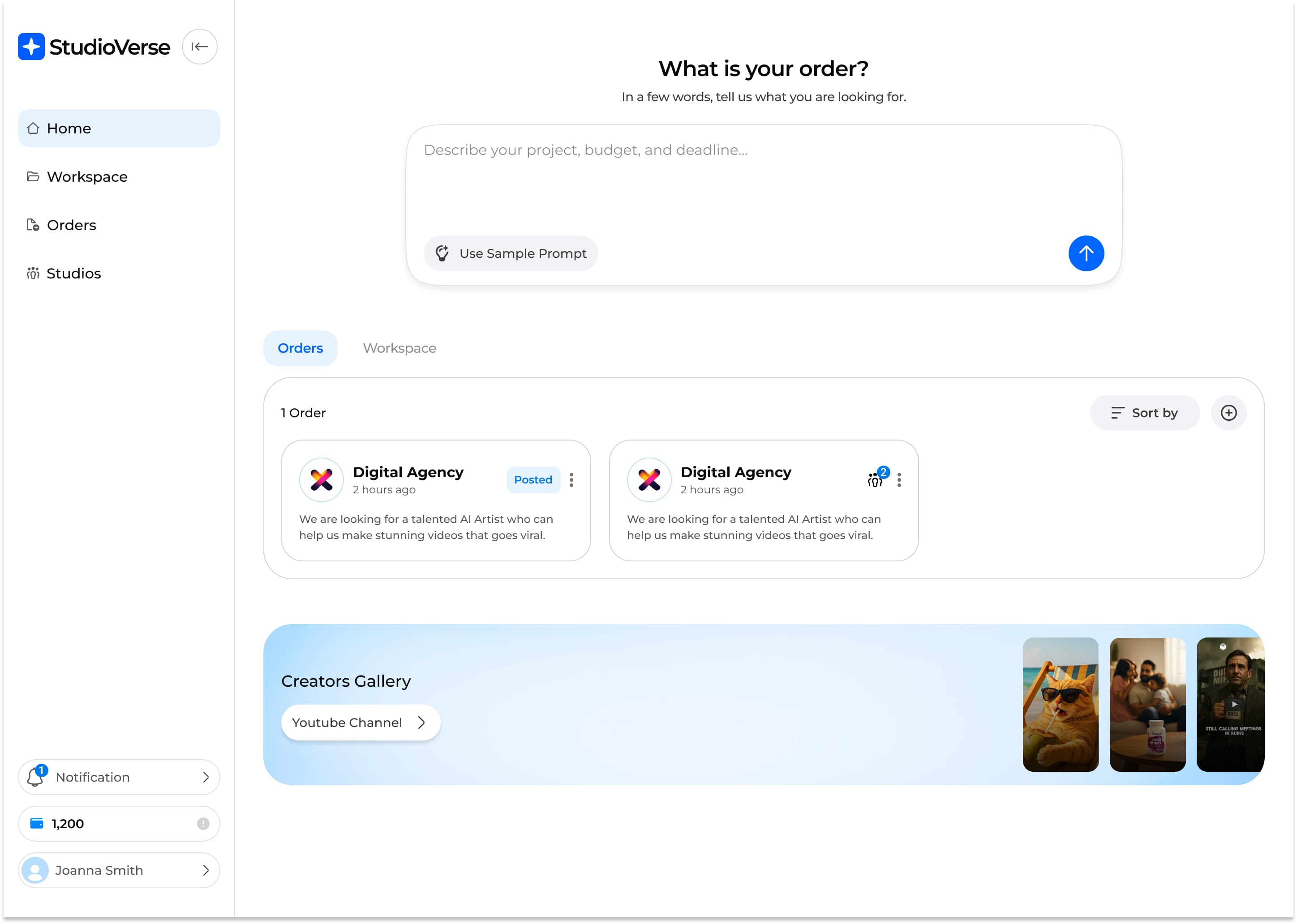
See Video Examples
Explore real examples from our production pipeline.
Get Membership & Save
Choose a plan that works best for you
Scale your campaigns

Silver
Replace a freelance editor
For founders & small teams getting consistent content out
- +10% discounts on orders exclusive for Silver Members
Typical Silver Members Get:
- Ordering 2-3 videos / month
- Working with creators via marketplace access
- Faster delivery through priority queue
- Managing projects with basic collaboration tools
Trusted by 500+ Businesses
Hear how creators and founders are building better with our platform.




Frequently asked questions
The fast answers buyers ask before their first video.
Yes. Studioverse produces on-brand short-form marketing video for B2B SaaS, from a single brief, with optional AI drafts for speed and vetted human video artists for hero assets.
AI drafts render in minutes. Human-creator videos are typically delivered within 24 to 72 hours depending on complexity, with priority turnaround available on higher tiers.
Both. Studioverse is hybrid by design: AI for speed and iteration, and vetted human video artists for assets that need real-actor footage or strong creative direction. You pick the path per order.
Yes. Every brand gets a free, watermarked sample video produced through the same pipeline, so you can evaluate quality, turnaround, and brand fit before paying. No credit card required.
Product and brand videos, UGC-style ads, explainer and demo videos, testimonial and social cuts, delivered in vertical, square, or horizontal for TikTok, Reels, Meta, YouTube, and LinkedIn.